In summary:
- Finding your optimal tee height is not about a universal rule, but about a personal diagnosis of your swing and impact location.
- Teeing the ball higher generally promotes a positive (upward) angle of attack, which is a key component for maximizing driver distance.
- Use foot powder spray on your driver face to get instant, precise feedback on where you are making contact.
- Systematically test different tee heights (low, medium, high) while monitoring your impact pattern to find the height that centers your strikes.
- Once you find your ideal height, use a marking system to ensure you can repeat it consistently for every tee shot.
Every golfer knows the frustration. You make what feels like a powerful, fluid swing with the driver, only to watch the ball either rocket straight up into the air—a dreaded sky ball—or scream low across the ground on a thin strike. The common advice is often a simple, one-size-fits-all rule: « tee it high and let it fly, » or « make sure half the ball is above the crown. » While these adages serve as a decent starting point, they fail to address the root of the problem for countless players struggling with inconsistent contact.
These generic rules ignore the critical variables of your unique swing mechanics, equipment, and desired shot shape. A golfer with a steep downswing will have a vastly different optimal tee height than a player with a shallow, sweeping arc. The true key to unlocking consistent, powerful drives doesn’t lie in a universal measurement. It lies in a process of systematic diagnosis to perfectly match your tee height to your personal impact dynamics. This isn’t about guessing; it’s about becoming a launch optimization expert for your own game.
This guide will move beyond the platitudes and provide you with a coach’s framework for finding your perfect tee height. We’ll explore the physics of launch, introduce practical diagnostic tools, and give you a repeatable system to turn your teeing ground into a launch pad for your best drives.
This article will guide you through the essential steps and knowledge required to master your tee height. The following summary outlines the key topics we will cover, from the physics of attack angle to the practical methods for ensuring consistency.
Summary: A Systematic Approach to Optimizing Tee Height for Every Club
- Why Does Teeing It High Promote an Upward Angle of Attack?
- How to Mark Your Tees to Ensure Consistent Height Every Time?
- Bamboo or Plastic: Which Tee Material Damages Mower Blades Less?
- The Teeing Mistake That Reduces Spin on Iron Shots
- How to Tee the Ball Low to Hit a Wind-Cheating Stinger?
- How to Use Foot Spray to Locate Your Impact Pattern on the Driver Face?
- The Setup Error That Causes Chunked Shots on Manicured Turf
- How to Size a Golf Glove to Prevent Blisters and Excess Movement?
Why Does Teeing It High Promote an Upward Angle of Attack?
Understanding the concept of Angle of Attack (AoA) is the first step in optimizing your driver performance. AoA is the vertical direction the clubhead is moving at impact. For maximum distance with a driver, a positive, or upward, AoA is ideal. Teeing the ball higher facilitates this by giving the clubhead more time to pass the low point of its swing arc and begin its ascent before striking the ball. This upward strike, combined with a clubface that has low loft, produces a high launch with low spin—the holy grail of modern driving.
The difference between a negative and positive AoA is significant. While elite male golfers often have a slightly negative AoA due to their incredible clubhead speed, it’s not the model for most amateurs. In fact, research from TPI shows that the average PGA Tour player has an AoA of -1.5 degrees, whereas the average LPGA Tour player, who often maximizes efficiency, has a +3 degree upward AoA. This upward strike is a major source of their distance.
For amateur golfers, the benefits are even more pronounced. Moving from a downward strike to an upward one directly translates to yards gained. It reduces backspin, which kills distance, and increases carry. In fact, robot testing confirms that moving from a -3° downward attack angle to a level 0° attack angle can increase driver distance by 20 yards at a 95 mph swing speed. Teeing it higher is the simplest setup change you can make to encourage this distance–unlocking upward blow.
How to Mark Your Tees to Ensure Consistent Height Every Time?
Once you begin the process of diagnosing your optimal tee height, you’ll quickly realize that « about right » isn’t good enough. Consistency is paramount. Finding the perfect height is useless if you can’t replicate it on every tee box. The solution is to develop a simple, repeatable system for marking your tees or gauging their height. This removes guesswork and allows you to build confidence in your setup, knowing one major variable is locked in.
There are several effective, low-tech methods to guarantee the same tee height shot after shot. You don’t need a fancy gadget; you just need a system. Some players prefer using permanent markers to draw lines on their tees, while others use physical gauges they’ve created themselves. The goal is to find a method that is quick, easy, and reliable under pressure on the course.
Here are a few proven methods for ensuring consistent tee height:
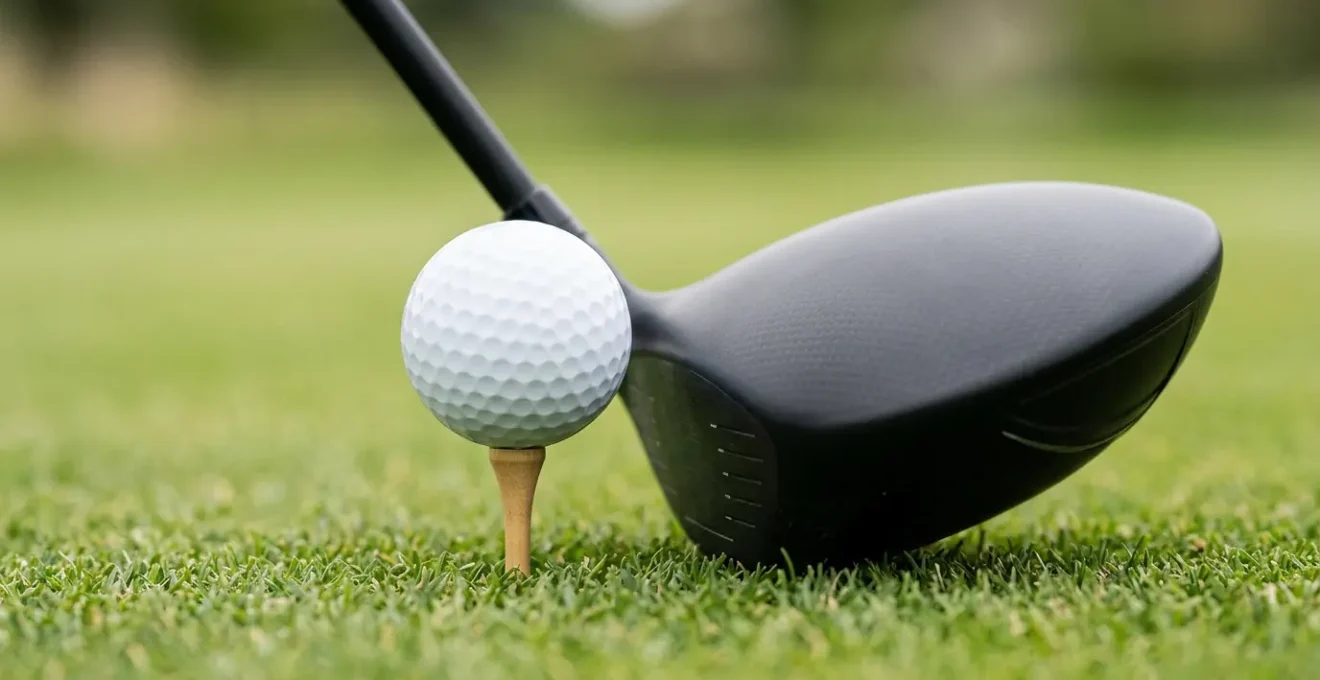
- The Driver Sole Calibration: After pushing the tee into the ground, place the sole of your driver next to the ball. A common and effective standard is to have the equator (middle) of the golf ball aligned with the top edge of your driver’s crown.
- The Index Finger Gauge: Use the natural creases on your index finger as a depth gauge. Push the tee into the ground until the top of the tee aligns with a specific crease on your finger for a consistent depth.
- The Sharpie Method: Once you find your perfect height at the driving range, take a permanent marker and draw a line on the tee at the point where it meets the turf. You can pre-mark a handful of tees to have them ready for your round.
By adopting one of these simple systems, you eliminate a significant variable, allowing you to focus on making a good swing rather than worrying if your setup is correct.
Bamboo or Plastic: Which Tee Material Damages Mower Blades Less?
The conversation around golf equipment is expanding beyond pure performance to include sustainability and course maintenance. One of the most frequently debated items is the humble golf tee: should you use traditional plastic or modern bamboo? While plastic tees offer durability, their environmental and maintenance-related drawbacks are significant. Broken plastic tees litter tee boxes and, more critically, can cause serious damage to the sophisticated and expensive mowers used to maintain a golf course.
Bamboo tees, on the other hand, present a far more course-friendly alternative. Bamboo is a grass, not a wood, and it shares similar properties with the turf it rests on. When a mower blade hits a bamboo tee, it tends to shred or mulch it, much like it does with grass clippings or leaves. This minimizes the risk of nicking or dulling the fine-reel mower blades, which are costly to sharpen and maintain. A sharp mower blade is essential for a healthy, clean cut of the turf, and using bamboo tees helps preserve that cutting edge.
Furthermore, the environmental argument is overwhelmingly in favor of bamboo. Plastic tees are a petroleum product and can persist in the environment for centuries. A broken plastic tee will sit in the soil for generations. In contrast, bamboo tees can begin to biodegrade within six months, returning to the earth with minimal impact. By choosing bamboo, golfers not only protect course maintenance equipment but also make a small but meaningful contribution to the sustainability of the game.
The Teeing Mistake That Reduces Spin on Iron Shots
While a high tee is beneficial for the driver, applying that same logic to iron shots from the tee box is a fundamental mistake that sabotages performance. The goal with an iron is not a high-launch, low-spin drive; it is a compressed, controlled shot with sufficient backspin to hold the green. Spin is your friend with an iron. The common error is teeing the ball too high, positioning it in a way that encourages a « sweeping » or slightly upward strike, similar to a fairway wood. This action dramatically reduces spin and control.
When you tee an iron too high, the clubface makes contact with the ball above its center of gravity. This type of strike imparts less friction and a lower, less stable spin rate, often resulting in a « flier » shot that travels further than intended and has little stopping power upon landing. For a proper iron shot, you want to strike the ball with a descending blow, compressing it against the clubface. A tee should only be used to guarantee a perfect lie, not to elevate the ball significantly off the turf.
The ideal tee height for an iron on a par-3 is barely off the ground. The goal is to simulate a perfect fairway lie. You should push the tee almost all the way into the ground, leaving just enough of the ball sitting above the surface to ensure a clean strike. This encourages the proper downward angle of attack needed for compression and optimal spin. As a benchmark, TrackMan data from the PGA Tour shows a general rule of thumb is 1,000 rpm of spin per club number—a 7-iron should spin around 7,000 rpm to be effective. Teeing the ball too high makes achieving these optimal spin rates nearly impossible.
How to Tee the Ball Low to Hit a Wind-Cheating Stinger?
On a windy day, the high, booming drive that works so well in calm conditions can become a liability. The ability to control trajectory and hit a low, penetrating « stinger » shot is an invaluable skill for any serious golfer. This shot is all about minimizing spin and launch angle to keep the ball under the wind, and the setup starts with tee height. Unlike a standard drive where you tee it high, the stinger requires you to tee the ball significantly lower.
Teeing the ball low forces a different impact dynamic. It promotes a more level or even slightly descending angle of attack, which de-lofts the clubface at impact and reduces backspin. This creates the low, boring trajectory that defines the stinger. However, simply teeing it low is not enough; the entire setup must be adjusted to produce the shot effectively. This includes changes to ball position and your body alignment to ensure you don’t inadvertently add loft back into the shot through impact.
Mastering this shot gives you a powerful weapon against the elements, turning a defensive situation into an offensive advantage by maintaining control and distance when others are struggling.
Action Plan: Your Stinger Shot Setup Sequence
- Tee the ball low: Start by pushing the tee deep into the ground. You want the center of the golf ball to be aligned with the lower half of your clubface, much lower than a standard drive.
- Move ball position back: Shift the ball from its normal position off your lead heel to a spot closer to the center of your stance. This encourages a more level or downward strike.
- Maintain lead shoulder low: During the downswing and through impact, focus on keeping your lead shoulder down. Allowing it to rise will add loft and defeat the purpose of the shot.
- Focus on a low finish: A key swing thought is to have your hands and the clubhead exit low and to the left (for a right-handed player) after impact. This helps keep the club de-lofted and the ball flight down.
How to Use Foot Spray to Locate Your Impact Pattern on the Driver Face?
The single most effective way to begin your journey to an optimal tee height is to gather data. You need to know where on the clubface you are currently hitting the ball. Guessing based on feel is notoriously unreliable. The best and cheapest way to get precise, visual feedback is by using athlete’s foot powder spray. A light, even coating on the driver face will act as a perfect impression tool, revealing the exact location of your strike after each swing.
This simple diagnostic process removes all ambiguity. A strike pattern that is too high on the face is the classic cause of a sky ball, while strikes low on the face lead to thin shots with excessive spin and lost distance. The goal is to find the tee height that consistently centers your impact pattern around the driver’s geometric center, or slightly above it. This vertical strike location is the key to unlocking both distance and forgiveness. Once you can see your pattern, you can make informed adjustments to your tee height, rather than just guessing.
Here is a simple protocol to conduct your own impact pattern test at the driving range:
- Prepare the Clubface: Apply a thin, even layer of foot powder spray across the entire driver face. Allow it to dry for about 10-15 seconds before hitting.
- Low Tee Test: Hit 5 balls using a low tee height, where the equator of the ball is below the top of the driver crown. Note the cluster of impacts.
- Medium Tee Test: Hit another 5 balls using a standard tee height (equator of the ball aligned with the crown). Analyze the new impact pattern.
- High Tee Test: Finally, hit 5 balls with a high tee (at least half the ball above the crown). Compare all three impact clusters to see which tee height produces the most centered and consistent strikes for your swing.
This test provides you with invaluable personal data, forming the foundation of your new, systematic approach to teeing the ball.
The Setup Error That Causes Chunked Shots on Manicured Turf
While tee height is a major factor in strike quality, it’s often linked to another fundamental setup flaw: ball position. For golfers who struggle with « chunked » shots—hitting the ground before the ball—the issue is often an incorrect ball position that leads to a poor angle of attack. This is especially true on tightly mown, manicured turf where there is very little margin for error. On such surfaces, players may subconsciously try to « pick » the ball clean off the grass, which disrupts the natural swing arc and leads to inconsistent contact.
The root cause is often a ball position that is too far forward in the stance for the club being used. With irons, the goal is to strike the ball first with a descending blow, taking a divot after the ball. If the ball is too far forward, the low point of the swing arc occurs behind the ball, causing the club to hit the ground first. This results in a chunked shot with a massive loss of energy and distance.
A correct setup places the ball in a position that facilitates this ball-first contact, promoting the compression needed for solid iron play.
Case Study: Ball Position’s Role in Strike Quality
In research presented at MIT involving Dr. Jim Suttie and TrackMan technology, the direct impact of ball position on strike quality was clearly demonstrated. The study showed that moving the ball slightly back in the stance encourages a steeper angle of attack, which is essential for creating proper compression with irons. Conversely, moving it forward shallows out the attack angle, ideal for a driver. The research identified improper ball position as a primary cause of inconsistent contact, particularly chunked shots on pristine turf where players’ attempts to « help » the ball into the air lead to poor results.
This highlights that while you might be focused on tee height, a quick check of your ball position could be the key to solving a much larger problem with your ball striking.
Key takeaways
- Tee height is the primary controller of your Angle of Attack and directly influences your launch conditions, spin rate, and total distance.
- Stop guessing and start diagnosing: use impact feedback tools like foot spray to understand your personal strike pattern before making adjustments.
- There is no single « correct » tee height; it is a dynamic tool that must be adjusted for different clubs (driver vs. iron) and desired shots (standard drive vs. stinger).
How to Size a Golf Glove to Prevent Blisters and Excess Movement?
While dialing in your tee height is about optimizing the club’s interaction with the ball, ensuring a proper connection to the club itself is just as vital. Your gloved hand is your primary link to the club, and an improperly sized glove can undermine your entire swing. A glove that is too large allows for slipping and excess movement between your hand and the grip. This friction is a leading cause of painful blisters and calluses. More importantly, it forces you to grip the club tighter to maintain control, creating tension in your hands and arms that kills clubhead speed and feel.
A properly fitted golf glove should feel like a second skin. There should be no loose material in the palm or at the fingertips. Many golfers make the mistake of choosing a glove that feels comfortable and slightly loose in the store, not realizing that leather gloves, in particular, will stretch with use. This leads to a sloppy fit after just a few rounds. Finding the right size is crucial for maintaining a light, consistent grip pressure, which allows for maximum speed and control over the clubface—two things that are essential for making a good strike, regardless of tee height.
Here’s how to ensure you have the perfect fit:
- The Palm Pinch Test: While wearing the glove, make a fist. If you can pinch any bunching or loose material in the palm area, the glove is too big.
- Finger Length: The material should be snug against the tips of your fingers. There should not be more than a tiny bit of extra material at the end.
- Material Stretch: Remember that a premium Cabretta leather glove will stretch. It should feel uncomfortably tight when you first try it on. Synthetic or hybrid gloves have less stretch and should fit snugly from the start.
- Analyze Wear Patterns: Look at your old gloves. A hole or heavy wear in the palm is a classic sign that your hand is moving inside the glove, likely because the glove or your grip is too large.
Ultimately, optimizing your game is a process of controlling variables. Stop leaving your tee height to chance and start using a systematic, data-driven approach. Take these diagnostic methods to the range, discover your unique impact pattern, and build a repeatable teeing system that gives you confidence on every tee box.