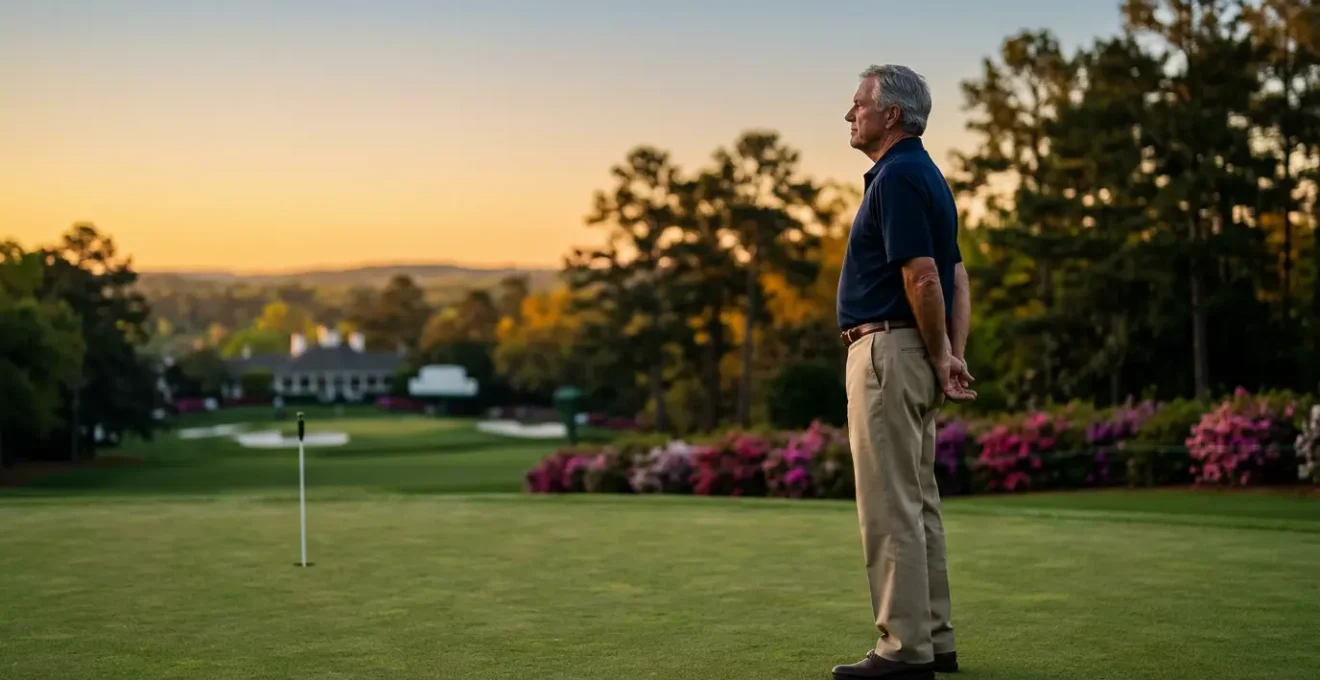
Qualifying for the Masters as an amateur transcends a mere checklist of victories. It demands a profound level of psychological fortitude to navigate the immense pressure of Augusta National’s traditions. This journey is less about the technical path to an invitation and more about demonstrating the character and mental resilience worthy of wearing the Green Jacket.
For any elite amateur golfer, the dream of receiving an invitation to the Masters Tournament represents the pinnacle of aspiration. Many fans and players believe the path to Augusta National is a straightforward matter of winning specific, high-profile amateur championships. While these victories are indeed the official gateways, they represent only the final, tangible step of a much more profound and demanding journey. The true qualification is not found in the rulebook alone; it is an unspoken test of character, mental resilience, and an ability to shoulder the symbolic weight of the tournament’s storied history.
The aura of Augusta is built on a philosophy of exclusivity and prestige, a stark contrast to the open-field nature of other major championships. This distinction is the source of the tournament’s unique pressure. An invitation is not merely a ticket to play; it is an acknowledgment that a player possesses the intangible qualities to become a custodian of tradition. This article will not simply list the qualification criteria. Instead, it will explore the deeper challenges and cultural nuances that define what it truly means to earn a place among the legends of the game, from the weight of the Champions Dinner to the psychological gauntlet of Amen Corner.
This guide will navigate the intricate layers of the Masters experience. We will dissect the traditions, pressures, and mental strategies that separate the invited from the aspirants, offering a historian’s perspective on what it takes to not just qualify, but to truly belong at the Masters.
Summary: The True Meaning of an Invitation to the Masters
- Why Is the Masters Field Smaller Than Other Major Championships?
- How to Create a Menu Worthy of the Masters Champions Dinner?
- The Green Jacket or The Claret Jug: Which Trophy Holds More Weight?
- The Mental Mistake That Cost Leaders the Jacket on Hole 12
- When to Tune In to Catch the Leaders at the Turning Point?
- When to Accept a Bogey as a « Good Score » in Competition?
- How to Survive the Winds of Amen Corner Without a Water Ball?
- How to Dress with Elegance on the Course Without Breaking the Bank?
Why Is the Masters Field Smaller Than Other Major Championships?
The limited field at the Masters Tournament is the foundational element of its prestige and a direct reflection of its core philosophy. Unlike the U.S. Open, The Open Championship, or the PGA Championship, which each host 156 players, the Masters is an invitational event. This distinction is not a minor detail; it is the very essence of the tournament. Augusta National Golf Club extends invitations based on a stringent set of criteria, curating a field that typically consists of only 85 to 100 players. This curated approach ensures that every participant, from past champions to the year’s top amateurs, has earned their place through exceptional achievement.
The « invitational philosophy » was established by the tournament’s founders, Bobby Jones and Clifford Roberts, who envisioned a gathering of the game’s finest talents in an intimate and unparalleled setting. This principle is so absolute that, as noted in a Golf News Net analysis, « The Masters has no alternates because it is an invitational tournament, not an open tournament. » If a qualified player withdraws, their spot is not filled. This reinforces the idea that an invitation is a personal honor, not a transferable entry ticket. For the aspiring amateur, this means the qualification path is narrow and unforgiving; there is no secondary route or last-minute opportunity. The small field size amplifies the pressure and the significance of the achievement, ensuring that merely teeing off on Thursday is a mark of supreme distinction in the world of golf.
How to Create a Menu Worthy of the Masters Champions Dinner?
The Champions Dinner, held on the Tuesday of Masters week, is a tradition steeped in history and personal expression. It is far more than a meal; it is the defending champion’s first formal act as a custodian of Masters tradition. The menu selection becomes a biographical statement, a unique opportunity for the champion to share a piece of their heritage with a room of golf’s most legendary figures. The pressure here is not on the golf course but in balancing personal taste with the gravitas of the occasion. The choice of cuisine is a delicate act of cultural diplomacy, and getting it right is a test of a champion’s understanding of their new role.
Case Study: Hideki Matsuyama’s Cultural Diplomacy
In 2022, Hideki Matsuyama, Japan’s first Masters champion, offered a menu that was a masterclass in cultural pride and respect for tradition. His selection featured assorted sushi, sashimi, yakitori chicken skewers, and the world-renowned Miyazaki A5 Wagyu beef. As detailed by ESPN’s coverage of past menus, Matsuyama’s meal was not just a dinner; it was a showcase of Japanese culinary excellence. This choice demonstrated a deep understanding of the moment, using food to bridge cultures and share his personal journey with the exclusive club he had just joined. It set a high bar for how a menu can honor both champion and tradition.
This tradition of personalizing the menu gained significant traction over the years. According to a history of Champions Dinner menus, « Bernhard Langer’s decision to show off German cuisine with his choice of wiener schnitzel for the 1986 Champions Dinner is often pointed at for inspiring more customization. » From that point forward, the menu became an anticipated part of the Masters narrative. For a future champion, the lesson is clear: the menu should be an authentic reflection of self, presented with an elegance and respect that befits the hallowed ground of Augusta National.
The image of a perfectly set, solitary place setting captures the essence of this exclusive gathering. It symbolizes the honor and the intense focus placed upon the champion, whose choices—both on the course and at the dinner table—are now part of the permanent record of the Masters. The symbolic weight of this meal is immense, a quiet but powerful reminder of the history the champion now carries.
The Green Jacket or The Claret Jug: Which Trophy Holds More Weight?
In the hierarchy of golf’s most coveted prizes, two stand apart: the Green Jacket, awarded to the Masters champion, and the Claret Jug, presented to the Champion Golfer of the Year at The Open. While both signify a monumental achievement, they represent different forms of prestige. The Claret Jug’s power lies in its history and its connection to the very origins of championship golf. As historical records show, it was first awarded in 1873, making it one of the oldest and most universally recognized trophies in all of sport. Winning it connects a player to a lineage that stretches back to the game’s Scottish roots. It is a symbol of conquering the elements and the world’s best players in the most « open » of all championships.
The Green Jacket, however, derives its immense weight from a different source: exclusivity and belonging. It is not a trophy one takes home permanently (except for the first year); rather, it is a uniform, a symbol of membership in what is arguably the most exclusive club in sports. As The Golf PA puts it in an analysis of golf’s greatest trophies, « The Green Jacket represents entry into an exclusive club of champions, it’s a private, lifelong symbol of belonging to an exclusive tribe. » This is the key distinction. While the Claret Jug is a public emblem of historical achievement, the Green Jacket is a deeply personal, almost mystical symbol of having been accepted into the inner sanctum of Augusta National.
For the aspiring amateur, dreaming of a major victory, the choice between the two is a matter of philosophical preference. The Claret Jug represents conquering the world. The Green Jacket represents being invited into a world apart. The pressure to win the Jacket is intrinsically linked to this desire for belonging, a validation that goes beyond a single week of spectacular golf. It signifies a permanent change in one’s status within the game, a transition from competitor to custodian of tradition.
The Mental Mistake That Cost Leaders the Jacket on Hole 12
Nowhere is the psychological pressure of the Masters more concentrated than on the 12th hole, « Golden Bell. » This seemingly simple 155-yard par-3, the heart of Amen Corner, is the tournament’s great disruptor. Its challenge lies not in its length but in its capacity to induce catastrophic mental errors. The swirling, unpredictable winds, the narrow green, and the ominous presence of Rae’s Creek create a perfect storm of doubt. Under the immense pressure of a Sunday charge, this hole has shattered the dreams of countless leaders. The primary mental mistake is a failure of emotional regulation—allowing the magnitude of the moment to override strategic discipline.
Case Study: Jordan Spieth’s 2016 Collapse
In 2016, defending champion Jordan Spieth stood on the 10th tee with a commanding five-shot lead. By the time he reached the 12th, that lead had shrunk, and the pressure was mounting. In what became a defining moment of Masters history, Spieth hit two balls into Rae’s Creek, leading to a quadruple-bogey seven. His pursuit of a second Green Jacket was over. As he later reflected, « That hole, for whatever reason, just has people’s number. » This incident, chronicled as a profound psychological test, is a stark illustration of cognitive overload. The pressure to win turned a routine shot into an insurmountable mental obstacle, proving that on this hole, psychological fortitude is more critical than swing mechanics.
Spieth’s experience is not an anomaly. The data confirms the hole’s treacherous nature on Sunday. According to tournament analysis, the number of double bogeys on hole 12 multiplies by more than five times during the final round compared to the first three. This statistic is a direct measure of pressure. Players who have remained patient and strategic for 65 holes suddenly make aggressive, ill-advised decisions, trying to force a birdie where a par is a triumph. They forget the cardinal rule of Amen Corner: survival is victory.
The serene beauty of the 12th hole, as depicted in the calm before the storm, is its greatest deception. The blooming azaleas and perfectly manicured green mask a cauldron of indecision. The swirling winds are invisible but all-powerful, a physical manifestation of the internal turmoil a leader experiences. Navigating this hole successfully on Sunday is the ultimate test of a player’s ability to quiet their mind and trust their strategy over their ambition.
When to Tune In to Catch the Leaders at the Turning Point?
For viewers and aspiring players alike, understanding the rhythm and flow of a Masters Sunday is key to appreciating its drama. While every shot is important, the tournament’s narrative invariably crystallizes on the back nine. The true turning point, however, occurs before the first shot is even struck on the 10th tee. It is a moment of transition, both physically and psychologically. The front nine at Augusta offers scoring opportunities and can lull a leader into a false sense of security. The back nine is where the Masters is truly won or lost.
The critical moment to focus attention is when the final group makes the walk from the 9th green to the 10th tee. A Golf Channel analysis of broadcast strategy memorably describes this as the symbolic « descent into the arena. » This is the point where the abstract pressure of leading the Masters becomes a palpable, physical reality. The roars of the crowd echo through the pines, the shadows begin to lengthen, and the player knows that the gauntlet of Amen Corner awaits. It is a solitary walk where a player must confront their nerves and commit to their strategy for the final, decisive stretch.
This transition marks the end of the tournament’s opening act and the beginning of its dramatic climax. From the 10th hole onward, every swing is magnified, and every decision carries the weight of history. For anyone watching, tuning in as the leaders begin this descent into the arena is to witness the precise moment the tournament’s pressure becomes its central character. It is the instant where a golfer’s composure will be tested to its absolute limit, setting the stage for the triumph or tragedy that will define that year’s Masters.
When to Accept a Bogey as a « Good Score » in Competition?
In a sport that celebrates birdies and eagles, the concept of a « good bogey » can seem counterintuitive. However, at the highest levels of competition, particularly at the Masters, strategic damage control is as vital as aggressive scoring. A good bogey is a score of one-over-par on a hole where a far worse number was a distinct possibility. It is the result of a calculated, conservative decision made under pressure to avoid a catastrophic error that could derail an entire tournament. Accepting a bogey is an act of psychological fortitude—a conscious choice to sacrifice one shot to protect the whole round.
This mindset is most critical on Augusta National’s treacherous back nine. On holes like 11, 12, and 15, where water hazards lurk and pin positions are perilous, trying to salvage a difficult par can often lead to a double or triple bogey. The smart player recognizes the moment of greatest risk, plays away from the danger, and accepts the relative victory of a bogey. It is a sign of a mature and disciplined competitor who understands that major championships are often won not by the player who makes the most birdies, but by the one who makes the fewest big mistakes.
Case Study: Tiger Woods’ Strategic Par at Hole 12 in 2019
Tiger Woods’ 2019 Masters victory was a masterclass in strategic patience, perfectly exemplified on the 12th hole. While his competitors in the final groups, including Francesco Molinari, attacked the Sunday pin and found the water, Woods executed a different plan. He deliberately aimed for the safety of the middle of the green, well away from the flag and the creek. He two-putted for a simple, uneventful par. While not a bogey, his play embodied the « good score » philosophy. As others saw their chances drown, Woods’ conservative strategy, as analyzed by Hello Birdie, was a strategic retreat that effectively secured his path to victory. He demonstrated that surviving Amen Corner is often more important than trying to conquer it.
For the aspiring amateur, this is a crucial lesson in course management and emotional control. Learning to identify the moments where a bogey is a success is a hallmark of an elite mindset. It requires setting ego aside and prioritizing long-term strategy over short-term gratification, a quality essential for anyone hoping to one day navigate the pressures of a Masters Sunday.
How to Survive the Winds of Amen Corner Without a Water Ball?
Surviving Amen Corner, and particularly the 12th hole, is the ultimate test of a player’s nerve, skill, and strategic acumen. The primary objective is simple yet profoundly difficult: avoid the water. The challenge is magnified by the notoriously fickle winds that swirl through the tall pines. As noted by Your Golf Travel in its analysis of Golden Bell, « The hole’s difficulty is further amplified by swirling winds that make club selection a daunting task. » These winds can change direction in an instant, turning a well-struck shot into a disaster. The key to survival is not to overpower the hole, but to outthink it.
This requires a combination of patience, precise execution, and a humble respect for the course. Attacking a Sunday pin on the 12th is a high-risk, low-reward proposition that has been the downfall of many. The safer, and smarter, play is always toward the center of the green, leaving a potential long putt but keeping the ball dry. This strategic discipline must be unwavering, even when trailing and feeling the pressure to make a move. The history of the Masters is filled with cautionary tales of players who let ambition override caution in Amen Corner, only to see their hopes vanish into Rae’s Creek.
The mental approach is as important as the physical one. A player must commit to their chosen club and shot shape with 100% conviction, as any hint of indecision during the swing can lead to a fatal miss. Surviving this stretch of holes is a victory in itself and often the catalyst for a back-nine charge.
Your Action Plan: Strategic Survival on Hole 12
- Patience and Precision: Heed Jack Nicklaus’s advice and wait for a consistent wind pattern before committing to the shot. Do not rush the decision.
- Accept Par as a Good Score: Resist the temptation to be a hero. A par on the 12th on Sunday gains strokes on much of the field.
- Prioritize Distance Control: When in doubt, focus on hitting the ball the correct distance to carry the creek and stay on the green, even if the lateral line is not perfect.
- Favor the Short-Left Miss: If a miss is unavoidable, the area short and left of the green generally provides the most manageable up-and-down opportunity.
Key Takeaways
- The Masters’ small, invitational-only field is the foundation of its unique prestige and pressure.
- Traditions like the Champions Dinner are not just ceremonial; they are early tests of a champion’s character and respect for history.
- The mental game, particularly navigating the pressure of holes like the 12th, is more critical to victory than pure technical skill.
How to Dress with Elegance on the Course Without Breaking the Bank?
While the focus is rightly on performance, the traditions of golf, and especially the Masters, extend to a deep-rooted sense of decorum and presentation. The way a player presents themselves is a non-verbal acknowledgment of respect for the game and its hallowed grounds. Elegance on the course is not about wearing the most expensive brands, but about adhering to a classic, respectful aesthetic. It is a part of the « custodianship of tradition » that defines the Augusta National experience. The key is to invest in timeless, well-fitting pieces that prioritize a clean and professional look.
As Keiser University’s College of Golf aptly states, « It is expected that you wear golf apparel on the golf course. A casual dress code on the golf course is much different than a casual dress code for many other sporting and leisure activities. » This highlights a crucial point: golf has its own sartorial language. It favors collared shirts, tailored trousers or shorts, and a general avoidance of loud, ostentatious patterns. For an amateur aspiring to play at the highest level, adopting this mindset early is important. It signals an understanding and appreciation for the deeper culture of the sport.
Building an elegant golf wardrobe can be done affordably by focusing on quality over quantity and versatility over trendiness. Classic colors like navy, white, grey, and khaki form a solid foundation that can be mixed and matched. A few high-quality polo shirts, a well-made pair of trousers, and a tasteful, weather-appropriate pullover are the cornerstones of a look that is both respectful and performance-oriented. The goal is to let your game be the main statement, with your attire serving as a quiet, confident backdrop that shows you belong.
Ultimately, earning an invitation to the Masters is a quest that tests every facet of a player. To put these lessons into practice, the next logical step is to build a competitive schedule and mindset focused on excelling in the high-pressure environments that lead to an Augusta invitation.