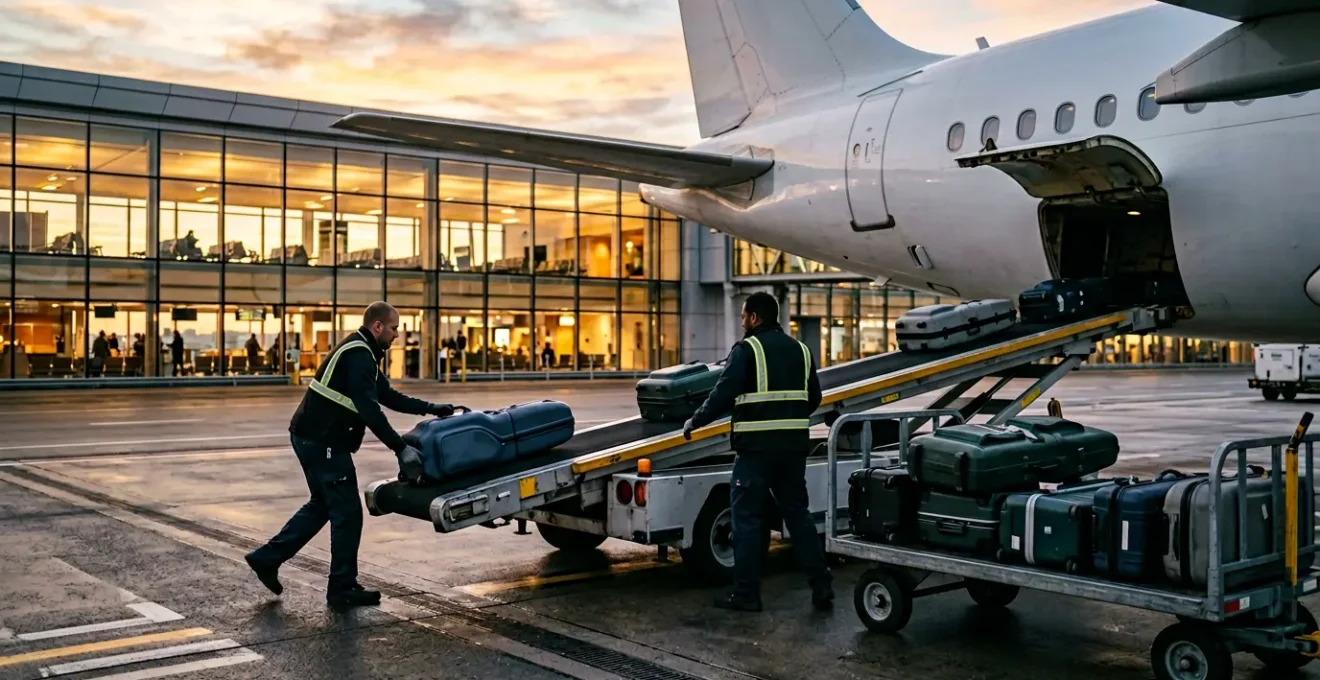
The key to a successful international golf trip isn’t just a durable travel bag; it’s a comprehensive logistics strategy that eliminates stress before you even leave home.
- Proactive shipping and detailed customs declarations prevent costly delays and damaged equipment.
- Smart itinerary planning that prioritizes rest and local immersion over marathon golf sessions enhances the entire experience.
Recommendation: Shift your focus from merely protecting your clubs to protecting your peace of mind. Build a robust plan that includes shipping, packing, and on-the-ground contingencies.
For any golfer, planning a trip to the hallowed links of Scotland or Ireland is the culmination of a dream. The anticipation of walking the same fairways as legends is thrilling, but it’s often overshadowed by a singular, nagging anxiety: getting your beloved clubs there in one piece. The internet is filled with basic advice—buy a sturdy travel case, check airline fees, and hope for the best. Many golfers simply stuff some towels around their driver and pray they don’t open their bag to a snap, crackle, and pop on the other side of the Atlantic.
This approach treats a critical logistical challenge as a game of chance. The fear of damaged gear, lost bags, or customs nightmares can cast a long shadow over what should be a trip of a lifetime. The constant worry erodes the very joy you’re seeking. But what if the true secret to a flawless golf journey wasn’t found in extra padding, but in a complete strategic mindset shift? The solution lies in building a framework of Logistical Serenity—a holistic plan that handles every detail before you lock your front door. This transforms the problem from simply ‘transporting clubs’ to ‘engineering a stress-free experience’.
This guide moves beyond the obvious and provides an expert framework for your entire journey. We will explore why these trips matter so deeply to local communities, how to plan an itinerary that energizes rather than exhausts you, and how to master the art of international shipping. Ultimately, you will learn how to secure your equipment and, more importantly, your peace of mind, allowing you to fully immerse yourself in the magic of the game.
To help you navigate this comprehensive strategy, this article breaks down the essential components of planning your international golf adventure. The following sections cover everything from the economic and cultural context of your trip to the granular details of packing, shipping, and maintaining your mental focus on the course.
Summary: A Strategic Approach to International Golf Travel
- Why Does Golf Tourism Sustain Rural Communities in Scotland?
- How to Pack for 4 Seasons of Weather in One Golf Bag?
- Scotland or Ireland: Which Destination Offers Better Value for Links Golf?
- The Itinerary Mistake: Booking 36 Holes a Day for 5 Days
- When to Book Tee Times for Top 100 Courses to Ensure Access?
- How to Ship Your Clubs Internationally Without Customs Delays?
- Why Does the Old Course Have Double Greens and Shared Fairways?
- How to Use the Scenery to Reset Your Mind After a Bad Hole?
Why Does Golf Tourism Sustain Rural Communities in Scotland?
Before diving into the logistics of your own trip, understanding its context reveals a deeper significance. Your journey is more than a personal pilgrimage; it is a vital lifeline for the very communities that preserve the soul of the sport. In Scotland, golf is not just a game but a cultural and economic pillar, particularly in rural areas where traditional industries have waned. The revenue generated by visiting golfers directly supports local economies in a way few other activities can, creating a sustainable model that protects the heritage you’ve come to experience.
The economic impact is staggering. According to recent economic research, golf tourism generates £286 million per year for the Scottish economy. This isn’t just about green fees at prestigious clubs. This revenue permeates every layer of the local community, from family-run B&Bs and local pubs to the caddies who share generations of course knowledge. A detailed study on St. Andrews tourism found that for every £1 a visiting golfer spends at the links, an additional £3.43 is spent elsewhere in the local economy. This multiplier effect is profound, directly supporting thousands of jobs and ensuring these historic towns remain vibrant.
As noted by a report from Sheffield Hallam University, this impact is disproportionately significant. The Sport Industry Research Centre highlights this fact in its analysis of the golf industry’s value:
Scotland accounts for 20 per cent of added value to the UK economy from the golf industry, despite comprising just eight per cent of the population.
– Sport Industry Research Centre, Sheffield Hallam University Report
Knowing this transforms your perspective. Every pound spent on a post-round pint or a locally sourced meal is an investment in the preservation of golf’s heartland. Your trip helps ensure that the timeless landscapes and welcoming communities you enjoy will be there for generations of golfers to come. This understanding is the first step toward appreciating the journey beyond just your scorecard.
How to Pack for 4 Seasons of Weather in One Golf Bag?
The infamous saying in Scotland is, « If you don’t like the weather, wait five minutes. » This is not an exaggeration. A calm, sunny morning can turn into a gale-force, sideways-rain afternoon in the time it takes to play three holes. For the unprepared golfer, this volatility can ruin a round and even a day. Packing for a links golf trip isn’t about bringing your entire wardrobe; it’s a strategic exercise in versatility and layering. The goal is to have an answer for any condition without adding unnecessary bulk or weight to your travel bag.
The core principle is a three-layer system that you can adapt on the fly. This system should be compact enough to fit within the empty spaces of your golf bag, serving as extra padding for your clubs.
- Base Layer: A moisture-wicking fabric (like merino wool or high-tech polyester) that pulls sweat away from your skin. This is crucial for staying warm even when you perspire during a brisk walk.
- Mid-Layer: An insulating layer that traps body heat. A lightweight fleece or a quarter-zip pullover is perfect. This layer provides warmth without restricting your swing.
- Outer Layer: A high-quality, fully waterproof and windproof jacket and pants. This is your non-negotiable shield against the elements. Invest in gear with sealed seams and good breathability.
Beyond clothing, think about accessories. Two pairs of waterproof golf shoes are essential, allowing one pair to dry while you wear the other. Pack multiple pairs of warm socks, a wool beanie for wind, a waterproof bucket hat for rain, and a pair of rain gloves that maintain grip when wet. This system ensures you are never caught off guard, allowing you to focus on your shot, not the impending squall. This preparation is a key part of your « Experience-First Planning » approach.
Visually organizing these layers in your bag is part of the strategy. The goal is to create a compact, stable package where clothing protects your equipment. This cross-section shows how to tuck layers between clubs efficiently.
As you can see, rolling clothes tightly and using them to fill every void prevents clubs from shifting and clanking during transit. This dual-purpose packing is the most efficient way to travel, protecting your gear while ensuring you’re ready for whatever the Scottish or Irish skies throw at you.
Scotland or Ireland: Which Destination Offers Better Value for Links Golf?
This is one of the most common debates among golfers planning their first great links adventure. Both Scotland and Ireland offer a breathtaking collection of world-class courses, rich history, and unparalleled hospitality. The truth is, there is no wrong answer, but the « better value » depends entirely on your definition of value. Is it purely about the lowest cost, or is it about the overall quality and accessibility of the experience?
From a pure cost perspective, Ireland often presents a slight edge. Green fees at many of its top-tier courses, outside of a few marquee names, can be more modest than their Scottish counterparts. Accommodation and dining, particularly in the more remote western regions, can also be more budget-friendly. Ireland’s courses are often clustered in regions like the Southwest (Ballybunion, Lahinch) or Northwest (Rosapenna, Enniscrone), which can reduce driving times and associated costs compared to a more spread-out Scottish itinerary.
Scotland, however, offers a different kind of value rooted in history and density. The sheer number of legendary courses within a small radius—especially around St. Andrews, East Lothian, and Ayrshire—is unmatched. While the top courses command premium prices, Scotland also boasts hundreds of lesser-known but exceptional local courses that offer an authentic links experience for a fraction of the cost. The data shows that visitors are willing to pay for this unique atmosphere; overseas golfing visitors to Scotland spend an average of £338 per night, an investment in a one-of-a-kind experience. The value here is in the history, the variety, and the feeling of walking through the birthplace of the game.
Ultimately, the decision comes down to your priorities. For a trip focused on maximizing the number of top-100 courses played on a slightly more manageable budget, Ireland might be the answer. For the golfer seeking historical immersion, unparalleled variety, and the spiritual home of the game, Scotland delivers a value that transcends the price tag. The best approach is to define your ideal trip first—the style, the pace, the « must-plays »—and then determine which country better aligns with that vision.
The Itinerary Mistake: Booking 36 Holes a Day for 5 Days
In the excitement of planning a dream golf trip, it’s easy to fall into the « marathon » trap. The thinking is straightforward: to maximize value, you must maximize the amount of golf played. This leads to itineraries packed with 36 holes a day, every day, often at courses hours apart. While this looks great on paper, it is the single most common mistake that can turn a dream trip into an exhausting slog. It completely undermines the goal of Logistical Serenity by ignoring the physical and mental demands of links golf.
Walking 18 holes on a true links course, often in windy conditions, is physically demanding. Doing it twice in one day is a serious athletic endeavor. Attempting this for several consecutive days leads to burnout, fatigue, and a steep decline in the quality of your golf and your overall enjoyment. You spend your time rushing from one course to the next, with no time to savor the experience, explore the local village, or simply relax in the pub afterward. As one PGA Professional wisely stated in the PGA.com Travel Guide:
The more proactive you are prior to traveling, the less likely you’ll experience disappointment when opening your bag post-flight.
– PGA Golf Professional, PGA.com Travel Guide
This principle of proactivity extends directly to your itinerary. A much smarter approach is the « Hub and Spoke » strategy. Instead of constantly moving, you establish a base in a central location for 3-4 nights and explore the courses in that region. This minimizes travel time, allows for rest, and provides flexibility. A 36-hole day can be exhilarating, but it should be the exception, not the rule. Schedule one, maybe two, such days and balance them with 18-hole days and even a full rest day for sightseeing. This is the essence of Experience-First Planning. The quality of your memories will be far greater from six incredible, well-rested rounds than from ten exhausting, rushed ones.
A well-paced itinerary is a core component of a successful trip. Here is a practical framework for building a more sustainable plan.
Action Plan: The Hub and Spoke Logistics Strategy
- Choose a central accommodation base for 3-4 days minimum.
- Book a non-stop flight when possible – most items are lost when transporting between planes.
- Ship clubs directly to your base hotel or first course.
- Arrange a rental car large enough for your travel bag if not shipping.
- Pre-book high-quality rental clubs as backup at each course.
- Schedule rest days between intensive playing days.
When to Book Tee Times for Top 100 Courses to Ensure Access?
Securing a tee time at a world-renowned course like the Old Course at St. Andrews, Royal County Down, or Muirfield is often the centerpiece of an international golf trip. However, access to these legendary venues is extremely limited and highly sought after. Simply showing up and hoping for the best is a recipe for disappointment. Ensuring access requires a proactive, strategic approach and, most importantly, long-range planning. For many of the most exclusive courses, the booking window opens—and often closes—a full year or more in advance.
The booking process varies significantly from club to club, so thorough research is essential. Here’s a general timeline and set of strategies to employ:
- 12-18 Months Out: This is the starting point for the most elite, private clubs (e.g., Muirfield, Royal Portrush). Many of these clubs allocate a very limited number of visitor days or times, often on specific days of the week. Applications or requests are typically accepted via email or an online form starting on a specific date. Be ready to submit your request the moment the window opens.
- 9-12 Months Out: This is the key window for many other Top 100 courses. For example, the Old Course at St. Andrews accepts advanced applications for private bookings in late August and early September for the following year. This is your best chance for a guaranteed time outside of the daily ballot. Other popular courses like Carnoustie or Ballybunion also see their prime times fill up quickly in this period.
- 6-9 Months Out: If you’ve missed the initial booking windows, all is not lost, but options become more limited. This is the time to work with a reputable golf tour operator. These companies often hold block bookings at top courses and can get you access when direct applications are closed. While it comes at a premium, it can be the only way to secure a coveted time.
- The Ballot/Lottery: For a few courses, most notably the Old Course, a significant portion of tee times are reserved for a daily « ballot » (lottery) held 48 hours in advance. This offers a chance for those without a pre-booked time, but it is far from a guarantee, especially in high season. It should be considered a bonus opportunity, not the primary plan.
The key takeaway is to build your itinerary around your « must-play » courses first. Identify their specific booking procedures and timelines, and set calendar reminders. Securing these anchor tee times a year in advance provides the structure around which you can then book your other rounds, accommodation, and flights. This level of foresight is a hallmark of an expert-level logistical plan.
How to Ship Your Clubs Internationally Without Customs Delays?
While flying with your clubs is a common approach, the most effective way to achieve true Logistical Serenity is to take them out of the airport equation altogether. Shipping your clubs ahead of time using a dedicated service like Ship Sticks, Luggage Forward, or FedEx is a game-changer. It eliminates the hassle of lugging a heavy travel bag through airports, the anxiety of airline damage, and the risk of them not arriving with your flight. However, international shipping introduces a new hurdle: customs. A poorly prepared customs declaration can leave your clubs stuck in a warehouse for days, defeating the entire purpose.
Navigating customs successfully is about providing clear, unambiguous information. Customs officers are looking for red flags that suggest a commercial import rather than personal effects for a temporary visit. Vague or suspicious declarations will trigger inspections and delays. The goal is to make it as easy as possible for an officer to approve your shipment without a second thought.
This requires meticulous documentation. Photographing your clubs and their serial numbers before you pack provides proof of ownership and condition. Filling out the customs forms with precise, strategic language is the most critical step. This is not the time for ambiguity; clarity is your best friend. Your documentation should tell a simple, consistent story: these are used personal items for a short recreational trip, and they will be returning with you.
The process of filling out these forms correctly is a key part of your pre-trip strategy. A few minutes of careful work here can save you days of stress and frantic phone calls from your destination.
To ensure your clubs sail through customs without a hitch, a precise checklist is invaluable. Following these steps methodically will minimize your risk of delays and allow you to arrive at your destination confident that your clubs are waiting for you.
Checklist for a Smooth Customs Process
- Declare items as ‘Used personal sporting equipment for temporary recreational purposes’.
- List a realistic depreciated value (typically 30-50% of original cost), not the replacement value.
- Never write ‘GOLF CLUBS’ or brand names on the outer box; use the shipping label as the sole identifier.
- Keep digital and physical copies of all customs forms and tracking numbers with you during travel.
- Include your return flight date on the forms to reinforce the temporary nature of the import.
Why Does the Old Course Have Double Greens and Shared Fairways?
Once your logistics are flawlessly managed, you can shift your focus from ‘getting there’ to ‘being there’. This means you have the mental bandwidth to appreciate the nuances of the courses you’re playing. No course is more unique than the Old Course at St. Andrews, and its most iconic features—the seven massive double greens and numerous shared fairways—are not quirks, but ingenious solutions to the challenges of early golf. Understanding their origin deepens your appreciation for every step you take on this historic ground.
The Old Course evolved organically over centuries. It was originally played ‘out and back’ over a narrow strip of land. To accommodate more players, the holes were simply reversed. Players heading ‘out’ (to the River Eden) would play to one side of the green, and those coming ‘in’ (toward the town) would play to a flag on the other side of the same putting surface. This created the double greens, a brilliant and efficient use of space. Only four greens on the course—the 1st, 9th, 17th, and 18th—are single greens.
Similarly, the shared fairways were a natural result of this out-and-back routing. With players moving in opposite directions on the same piece of land, wide fairways were essential for both playability and safety. This design encourages a strategic creativity rarely seen on modern courses. You often have an immense amount of room off the tee, but finding the correct angle for your approach to a specific pin location is the true challenge. It’s a thinking person’s course, a puzzle that has confounded the world’s best for 500 years.
This historic, land-efficient design also offers a lesson for modern golf travel. While the dream is to bring your full 14-club arsenal, some travelers are embracing a minimalist approach that echoes the spirit of early golf.
Case Study: The Minimalist Golf Travel Strategy
Research from Sunday Golf highlights a growing trend of golfers traveling with just 5-7 clubs in a lightweight carry bag. This strategy can eliminate checked bag fees entirely and drastically simplifies logistics. A popular hybrid model involves bringing your most personalized clubs (e.g., putter, driver) in a small bag as a carry-on and renting a half-set locally. This reduces cost and burden while still allowing you to perform effectively on courses where the ground game and creativity are more important than covering exact yardage gaps with a full set of irons.
Key Takeaways
- A holistic logistics plan focusing on ‘peace of mind’ is more valuable than just protecting your clubs.
- Proactive itinerary planning that balances play with rest is essential to avoid burnout on physically demanding links courses.
- Shipping clubs internationally is often the superior choice, provided customs documentation is precise and strategically worded.
How to Use the Scenery to Reset Your Mind After a Bad Hole?
You’ve done it. The planning is complete, the logistics are flawless, and you are standing on the 7th tee of a world-famous links course. Then, you make a triple bogey. In that moment, all the joy and anticipation can curdle into frustration. This is where your pre-trip logistical work delivers its final, most important payoff: mental freedom. Because you aren’t worried about whether your clubs will arrive for tomorrow’s round or how you’ll make a tight travel connection, you have the cognitive resources to manage the inevitable frustrations of the game itself.
The ability to reset after a bad hole is what separates a good round from a great day. On a links course, your greatest tool for this is the environment itself. Instead of stewing over your last shot, actively engage your senses with the scenery around you. Look at the waves crashing on the shore. Feel the wind on your face. Listen to the cry of the seabirds. Watch the shadows move across the towering dunes. This practice, often called ‘grounding’, pulls you out of the negative feedback loop in your head and back into the present moment. You traveled thousands of miles for this experience—don’t let one bad swing rob you of it.
This mental security is a luxury that only sound planning can provide. A professional golfer, describing their travel routine for GolfPass, perfectly captured this connection between logistical security and on-course performance:
I go on at least 10 golf trips a year. The only club I must travel with is my driver… But knowing I have quality rental clubs pre-booked as backup eliminates the catastrophic fear of ‘what if my clubs don’t arrive?’ This security is what truly allows me to enjoy the scenery and reset mentally after a bad shot.
– Professional Golfer, GolfPass
This is the ultimate goal of your entire strategy. The checklists, the advance bookings, the shipping labels—they are all instruments designed to deliver this singular moment of peace. The freedom to hit a bad shot, shrug, look out at the horizon, and say, « It doesn’t matter. I’m here. » That is the true return on your logistical investment.
By shifting your focus from reactive problem-solving to proactive, holistic planning, you transform the entire nature of your journey. You are no longer just a tourist hoping for the best, but a logistical master in full control of your experience. To put these strategies into practice, the next logical step is to begin building your own comprehensive travel plan today.