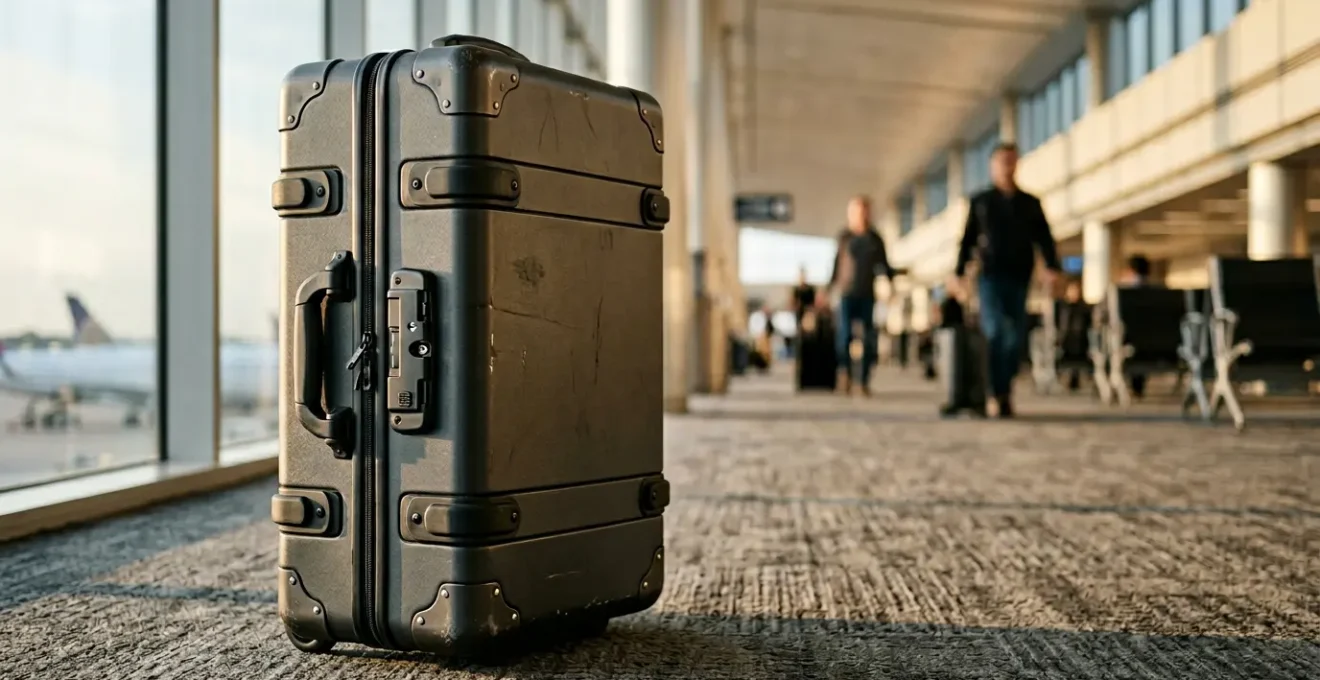
The decision isn’t simply checking versus shipping your clubs; it’s about developing a personal logistics strategy that matches your trip’s complexity, your budget, and your tolerance for risk.
- Checking your clubs is cost-effective for simple trips, but requires meticulous packing and a solid contingency plan for delays or damage.
- Shipping services offer maximum peace of mind and convenience, handling customs and logistics, but at a premium price.
Recommendation: Instead of seeking a one-size-fits-all answer, analyze your specific itinerary and anxiety level to build a custom transport plan that guarantees your focus remains on the golf, not the gear.
The dream of playing a true links course in Scotland or Ireland is a rite of passage for any serious golfer. You can already picture it: the dramatic coastal views, the crisp sea air, and the unique challenge of historic fairways. But between that dream and the first tee, a logistical nightmare often takes hold: how do you get your precious, perfectly fitted set of clubs halfway around the world in one piece? The fear is palpable. Stories of snapped drivers, lost bags, and customs holdups are common, and a recent report revealed that you are 5 times more likely to have luggage mishandled on international routes compared to domestic ones.
Many will tell you the solution is simple: just buy a heavy-duty travel case and hope for the best. Others might suggest expensive shipping services without much context. This advice, however, misses the fundamental point. The real key to eliminating travel anxiety isn’t a single product, but a comprehensive logistical strategy. It’s about understanding the entire ecosystem of your trip—from its economic impact on local communities to the nuances of its schedule—and making an informed decision that prioritizes your peace of mind.
This guide reframes the question. We won’t just compare checking versus shipping; we will provide a strategic framework to help you decide which method aligns with your specific journey. We will delve into packing secrets that go beyond simple padding, explore the hidden costs and benefits of each option, and create contingency plans that turn potential disasters into minor inconveniences. Ultimately, the goal is to ensure your mental energy is spent reading greens, not tracking numbers.
This article provides a complete strategic overview for making the best decision for your golf trip. By exploring every angle from economic impact to mental preparation, you will be equipped to build a transport plan that works for you.
Summary: A Strategic Guide to International Golf Club Transport
- Why Does Golf Tourism Sustain Rural Communities in Scotland?
- How to Pack for 4 Seasons of Weather in One Golf Bag?
- Scotland or Ireland: Which Destination Offers Better Value for Links Golf?
- The Itinerary Mistake: Booking 36 Holes a Day for 5 Days
- When to Book Tee Times for Top 100 Courses to Ensure Access?
- How to Ship Your Clubs Internationally Without Customs Delays?
- Why Does the Old Course Have Double Greens and Shared Fairways?
- How to Use the Scenery to Reset Your Mind After a Bad Hole?
Why Does Golf Tourism Sustain Rural Communities in Scotland?
Before deciding how to transport your clubs, it’s essential to understand the context of your trip. A golf pilgrimage to Scotland is more than just a personal vacation; it’s a significant economic event for the communities you visit. Your decision to bring your own clubs and pay for green fees directly supports a fragile ecosystem, particularly in rural areas. Research commissioned by VisitScotland and Scottish Enterprise shows that golf tourism contributes over £286 million per year to the Scottish economy. This isn’t just about the famous championship courses; it’s about the small, community-run links that depend on visitor revenue to survive.
The impact is profound. A 2025 report on the Scottish Highlands found that for every £1 spent on golf, the wider economy benefits by £5. This multiplier effect touches everything from local bed & breakfasts to pubs and transport services. When you choose to travel with your gear, you are participating in this ecosystem in the most direct way possible. This perspective elevates the logistical challenge: getting your clubs there safely is not just for your benefit, but is also a key part of contributing to the preservation of the sport’s heritage. It frames the entire process as a worthy investment, justifying a more strategic approach than simply throwing your bag in the hold.
Understanding this economic role transforms the transport decision from a personal hassle into a meaningful part of the travel experience. It gives weight and purpose to the logistical planning that follows, reinforcing that a well-executed strategy ensures both your enjoyment and the vitality of the golfing destinations you cherish.
How to Pack for 4 Seasons of Weather in One Golf Bag?
Whether you ultimately decide to check your bag or ship it, a bulletproof packing strategy is the non-negotiable foundation for protecting your investment. The goal is twofold: protect the clubs from the inevitable bumps of transit and use every cubic inch efficiently, especially when packing for the unpredictable weather of the British Isles. Think of your travel bag not as a container, but as a custom-fitted suit of armor for your equipment. A common mistake is to rely solely on the outer case, but professional-level protection happens inside the bag.
This begins with club selection and preparation. First, remove the heads from your driver and any other adjustable woods. Store them in their headcovers, perhaps even tucked into a shoe inside your main luggage, to eliminate the primary point of failure—a snapped shaft at the hosel. Next, use a dedicated support rod, like a Stiff Arm, or even a simple broom handle cut to size, that extends just beyond your longest club. This simple device acts as a sacrificial spine, absorbing any direct impact if the bag is dropped head-first. Don’t stop there; wrap your irons in towels or use the very clothes you’ll wear on the trip (rain gear, sweaters) to fill all empty space. This prevents clubs from rattling against each other and provides an extra layer of shock absorption. This strategic layering is where amateurs fail and experts succeed.
Finally, think about weight distribution. Golf balls are surprisingly heavy. To avoid costly overweight baggage fees, pack them in your checked suitcase, not your golf bag. Adhering to the airline’s weight limit (typically 50 pounds or 23 kg) is crucial. By meticulously preparing your bag before it even enters the travel case, you’ve already won half the battle and significantly reduced the risk of damage, regardless of the transport method you choose.
Scotland or Ireland: Which Destination Offers Better Value for Links Golf?
While this question often focuses on comparing green fees and accommodation costs, the expert traveler knows that « value » is a much broader concept. It’s about the total landed cost and the reduction of travel friction. The logistical decisions you make, especially concerning your clubs, play a significant role in this calculation. For example, Scotland’s golf courses are often clustered more densely (e.g., in Fife or East Lothian), potentially reducing travel time and transport costs between rounds. Ireland’s magnificent links, however, can be more spread out, requiring more driving and, consequently, more loading and unloading of your gear.
This geographic reality directly impacts your club transport strategy. If your itinerary involves multiple hotel changes and daily car travel, the convenience of a door-to-door shipping service might offer far greater « value » than the daily hassle of lugging a heavy travel case in and out of a rental car. Conversely, if you’re staying in one location for the entire week, checking your bag on the flight and leaving it at your hotel might be the most efficient and cost-effective solution. The decision isn’t about which country is cheaper in absolute terms, but which logistical plan best suits the itinerary you’ve chosen.
The « peace of mind calculus » is paramount here. What is the price you are willing to pay to eliminate a specific point of friction? Is the premium for a shipping service worth avoiding the anxiety of the baggage carousel or the struggle with a bulky case? The answer is personal, but framing the Scotland vs. Ireland value proposition through this logistical lens provides a much clearer path to a satisfying and stress-free trip.
The Itinerary Mistake: Booking 36 Holes a Day for 5 Days
One of the most common mistakes first-time golf travelers make is over-scheduling. The ambition to play as much as possible is understandable, but an aggressive itinerary leaves zero room for error, especially when it comes to gear logistics. A delayed flight, a slow baggage claim, or a misrouted golf bag can derail your entire trip if your first tee time is just hours after you land. This is where a robust contingency plan moves from a « nice-to-have » to an absolute necessity. While the overall US airline mishandled baggage rate was a relatively low 0.55% in 2024, that number isn’t zero, and the rate for international travel is historically higher.
A proper contingency plan anticipates the most likely points of failure. What happens if your clubs don’t appear on the carousel? Before you even leave home, you should have researched rental club options at your destination courses. Know their inventory and cost. Your travel insurance is a critical part of this plan. Don’t just get any policy; opt for specialized golf travel insurance that explicitly covers not just the value of your clubs, but also the cost of high-end rentals and any pre-paid, non-refundable green fees you might miss. It’s a small investment for significant peace of mind.
Furthermore, simple preventative measures can make a world of difference. Take photos of your clubs and all gear before packing for irrefutable proof in case of a damage claim. Label your bag extensively, both inside and out, with your name, contact info, home address, and the address of your destination hotel. By building buffer time into your itinerary and having a clear, actionable plan for when things go wrong, you transform a potential trip-ruining disaster into a manageable inconvenience.
Action Plan: Your Pre-Flight Insurance and Backup Checklist
- Obtain specialized golf travel insurance covering club damage/loss, theft, and reimbursement for pre-paid green fees.
- Label your golf bag thoroughly on both the inside and outside with name, phone, hotel contact, and flight information.
- Take detailed photos of every club and piece of gear before packing to serve as evidence for any potential insurance or airline claims.
- Research high-quality rental club options at your destination courses as a pre-vetted Plan B before you depart.
- Confirm your travel insurance policy provides immediate funds for high-end equipment rentals in case of delay, not just reimbursement later.
When to Book Tee Times for Top 100 Courses to Ensure Access?
Securing a coveted tee time at a world-renowned course like the Old Course at St Andrews or Royal County Down is a logistical challenge in itself, often requiring planning a year or more in advance. The decision of how to transport your clubs should be integrated directly into this master planning timeline, not treated as an afterthought. Your club transport strategy is a key milestone that directly influences and is influenced by other critical booking deadlines.
A well-structured timeline prevents last-minute panic and costly mistakes. Roughly 6-12 months out, as you’re entering ballots and securing your primary tee times, you should also be researching airline baggage policies and the costs of various shipping services. At the 3-month mark, with flights booked, it’s time to commit: purchase your high-quality travel case if checking, or book your club shipment to lock in better rates. Leaving this decision to the last minute can result in exorbitant fees or discovering that your preferred shipping service is fully booked. This long-range planning is especially critical for destinations like St Andrews, where visitors contribute to a massive £317 million annual economic impact, making every aspect of travel logistics highly competitive.
Your timeline should extend right up to your departure. One week out is the time for meticulous packing and creating a photographic inventory of your gear. This is also the perfect time to drop a GPS tracker like an AirTag into your bag for ultimate tracking visibility. By integrating the « how to transport » decision into your overall « when to book » timeline, you create a seamless, stress-free process. The logistics of club transport become just another checkbox on a well-managed project plan, rather than a source of frantic, last-minute anxiety.
How to Ship Your Clubs Internationally Without Customs Delays?
For the golfer whose primary concern is peace of mind, shipping clubs via a specialized service like Ship Sticks is the gold standard. This method effectively outsources the biggest anxieties of international travel: navigating airline baggage policies, waiting at the carousel, and, most importantly, dealing with customs. However, to ensure a smooth process, you must be an active participant. The key is providing flawless documentation and avoiding common red flags that can trigger delays and import duties. While standard airline fees can range from $30-$60 for a pre-booked bag under 50 lbs, the premium for a shipping service buys you expertise in customs brokerage.
The most critical document is the pro-forma invoice. When preparing your inventory list, use precise, unambiguous language: « Used Personal Sporting Equipment for Temporary Import for Vacation. » This clearly states the nature and purpose of the goods, signaling to customs officials that they are not for resale. Crucially, pack *only* used items in your golf bag. Do not include new, in-box merchandise like sleeves of balls, new shoes, or a brand-new rangefinder. These items are commercial goods and can trigger inspections and import taxes, delaying your entire shipment.
Choosing a golf-specific shipping company over a general carrier like FedEx or UPS is highly recommended. These specialized services have dedicated customs brokers who understand the specific requirements for sporting goods and manage the paperwork on your behalf. They can anticipate issues and resolve them proactively. Even with this expert help, adding a GPS tracker to your bag provides an invaluable layer of visibility and control, allowing you to monitor your clubs’ journey through the clearance process. By being meticulous with your documentation and contents, you empower the shipping service to get your clubs to their destination with zero friction.
Checklist: Your Customs-Proof Shipping Guide
- Prepare a pro-forma invoice and detailed inventory list, using the precise wording: « Used Personal Sporting Equipment for Temporary Import for Vacation. »
- Pack only used items; avoid including any new, in-box merchandise (balls, gloves) that could trigger import duties and inspections.
- Choose a golf-specific shipping service that provides expert customs brokerage and manages all necessary paperwork on your behalf.
- Place a GPS tracker (e.g., AirTag) inside your bag for real-time location visibility throughout the customs clearance process.
- Book your shipment at least one month in advance to secure better rates and ensure a delivery window well before your first tee time.
Why Does the Old Course Have Double Greens and Shared Fairways?
The unique architecture of the Old Course at St Andrews is a product of its centuries-old evolution, but for the modern golfer, it presents a unique set of logistical considerations. The vast double greens and shared fairways were designed for a game played in two directions, but they also influence club selection and, by extension, your travel strategy. The constant presence of wind and the need for a low, running ground game might prompt you to add a driving iron or a specialized wedge to your bag. This decision, seemingly minor, affects your bag’s total weight and packing calculus, which is a critical component of your transport plan.
Nowhere is the intersection of strategy and opportunity more apparent than with the Old Course’s 48-hour ballot. Winning a spot is a dream come true, but it demands an immediate, pre-planned logistical response. This is where the concept of a « Go-Bag » strategy becomes invaluable.
Case Study: The Old Course Ballot Winner’s 48-Hour Plan
When you win the Old Course ballot with only 48 hours’ notice, shipping isn’t an option. Success depends on having an immediate action plan. The ‘Go-Bag’ strategy requires three things to be ready at all times: a high-quality travel case already purchased, complete knowledge of your airline’s specific golf baggage policies, and a pre-prepared packing checklist. The emotional payoff of sinking a putt on a historic double green with your own trusted putter is immeasurable, justifying the advance preparation. Planning must also extend to ground transport; verifying your rental car can accommodate a full-size golf travel case is a crucial but often-overlooked detail. This scenario proves that a proactive logistical strategy doesn’t just prevent problems—it creates opportunities.
This extreme example underscores a universal truth for all golf travel: preparation is freedom. Knowing your logistical plan inside and out allows you to say « yes » to incredible, last-minute opportunities. This level of readiness is particularly relevant when traveling to high-demand areas where overseas golfing visitors spend on average £338 per night, underscoring the high stakes and competitive nature of securing every part of the experience.
Key takeaways
- Your transport choice (checking vs. shipping) is a strategic decision, not a simple preference, based on your itinerary, budget, and risk tolerance.
- A robust contingency plan, including specialized travel insurance and knowledge of rental options, is non-negotiable for international golf travel.
- Integrating your club transport logistics into your master travel timeline (3-6 months out) is crucial for avoiding last-minute stress and expense.
How to Use the Scenery to Reset Your Mind After a Bad Hole?
Ultimately, the entire purpose of meticulous logistical planning is to free your mind. The reason you go to the trouble of packing perfectly, creating contingency plans, and navigating customs is so that when you are finally standing on the fairway, your full attention is on the game and the breathtaking environment around you. A double bogey is frustrating, but it’s a temporary setback. Losing your clubs, or worrying that they might be lost, is a pervasive anxiety that can poison an entire trip. A successful transport strategy is the antidote to that anxiety.
When your mind is clear of logistical worries, you can truly leverage the therapeutic power of the landscape. After a bad hole, instead of stewing in frustration, you can lift your head and absorb the vastness of the sea, the dramatic sky, and the ancient contours of the land. This is the mental reset button. The scale of the scenery puts a single poor shot into its proper, insignificant perspective. This mental freedom is the true return on your investment in planning. It’s the ultimate « value » that can’t be quantified in a spreadsheet comparing shipping costs to baggage fees.
If you’re constantly checking a tracking app, worrying about a potential damage claim, or second-guessing your decision, you are robbing yourself of this essential experience. The goal is to arrive at the first tee with your trusted clubs in hand and a mind that is quiet, present, and ready to embrace the challenge and beauty of the course. This is the hallmark of a journey where the logistics were handled so expertly that they became invisible.
Your journey to the world’s greatest links courses begins not with a swing, but with a plan. Start building your logistical strategy today, and trade travel anxiety for the pure anticipation of the first tee. Evaluate your itinerary, assess your budget, and choose the path that delivers not just your clubs, but also your peace of mind.